AVISO IMPORTANTE: PERÍODO ELEITORAL

Em cumprimento à legislação eleitoral (Lei nº 9.504/1997), os conteúdos e funcionalidades do portal Semear Digital estão passando por adaptações temporárias. Entre 4 de julho e 25 de outubro de 2026, algumas notícias e outros materiais institucionais poderão ser suspensos ou modificados. Mas, fique tranquilo, todas as informações técnicas sobre o projeto e os canais de atendimento ao cidadão continuam funcionando normalmente.

O objetivo do projeto é superar as desigualdades no campo a partir de pesquisa, desenvolvimento, inovação (PD&I) em Tecnologia da Informação e Comunicação (TIC) visando ampliar a produção e produtividade dos pequenos e médios produtores.

Please enter subscribe form shortcode

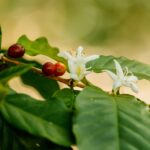
Coffee plantations in the mountains
3 de November de 2025

Research aims to overcome the connectivity challenge in rural areas

The low availability and poor quality of connectivity services in rural areas is one of the obstacles to strengthening digital agriculture in Brazil. This challenge involves more than just connectivity at rural property headquarters ; it also involves enabling connection between headquarters and production locations. The Semear Digital project includes a research axis dedicated to innovative solutions that provide quality connectivity in the field and make connectivity solutions economically viable.

This axis is divided into two research lines. One line is led by the National Institute of Telecommunications (INATEL) and develops prototypes and system proposals in response to the identified demands of the Agrotechnological Districts studied in the project. "Within our research line, we seek to understand the various needs of those in the field, from those who want to simplify invoicing and access WhatsApp anywhere on their property, to those who want to work with robots and connected devices in planting areas", explains Arismar Cerqueira, an INATEL researcher. "At this stage of Semear Digital, we have a better understanding of these demands and are identifying which technologies can meet them. We balance technical feasibility with solution costs to ensure accessibility for small- and medium-sized rural producers".

One of the initiatives is the development of a low-cost, easy-to-build antenna aimed at expanding connectivity in rural areas. This practical and accessible solution operates on both 5G and satellite frequencies and can distribute the signal in all directions. The antenna's main feature is its ability to manipulate its properties to cover a larger area. One of its reconfigurable aspects is the ability to adjust the orientation of its axis to improve signal reception. The antenna is made of a widely available, low-cost type of fiberglass, making it lightweight, an important characteristic for field applications.

Using an internet signal available at a farm headquarters, the technology could disseminate the connection several kilometers away, depending on the terrain and other local factors. Other potential applications include forming antenna arrays to extend range and using them on drones. The researchers have created an initial prototype, and the next step is to manufacture a more refined one for practical testing.

According to Arismar Cerqueira, "It's important to note that no single technology meets every need, which is why we're exploring various options, such as testing a transmitter and receiver developed by our team in the field, as well as studying fiber- and satellite-based technology". For locations where fiber optic cabling is impractical, the researchers are studying a wireless optical communication system. "We can describe this technology as'Light Links in the Air'" , the researcher explains. "It functions as a transport network capable of connecting a farm headquarters to another area two to three kilometers away".

Another technology that has already been tested in the Jacupiranga Agrotechnological District is based on using idle TV channels for data transmission, known as TV White Spaces (TVWS). Operating in frequency bands with greater range and penetration, TVWS presents itself as a viable alternative for hard-to-reach areas, eliminating the need for large infrastructure investments. The demonstration sparked interest from local rural landowners due to its potential applications in automation, sensing, and data management in an agricultural environment.

This text was translated with the assistance of artificial intelligence (DeepL and DeepSeek) and reviewed by Érica Speglich

Keep up to date with Semear Digital!

Sign up to our newsletter to receive updates and information about our latest publications.