
AI-powered digital trap monitors sugarcane borer in Alto Alegre
A study conducted in Alto Alegre, in the interior of São Paulo, showed that digital traps equipped with artificial intelligence and Internet of Things technology can improve the monitoring of the sugarcane borer, which is considered the main sugarcane threat. Led by Glauber Gava, a researcher at the Agronomic Institute (IAC) of the São Paulo State Department of Agriculture and Supply, the study was developed under the Semear Digital project. It tested a prototype capable of automatically recording the insect's presence in commercial fields.
The sugarcane borer directly impacts the production of ethanol and sugar, which are strategic sectors for Brazil's energy matrix and trade balance. Brazil is the world's largest sugarcane producer, accounting for one-third of global output. Projections indicate that the 2025/26 harvest will be approximately 670 million metric tons, according to the National Supply Company (Conab). This will solidify the country's position as a leading supplier of bioenergy through ethanol production and burning sugarcane bagasse.
The sugarcane borer, whose scientific name is Diatraea saccharalis, is found nationwide and can cause yield losses of up to 30%. In addition to reducing stalk weight and sugar content, a borer infestation can lead to the growth of fungi, such as Fusarium spp., which causes red rot and compromises the quality of the raw material.
A study by Professor Márcia Mutton from the University of São Paulo (UNESP) in partnership with the Sugarcane Technology Center (CTC) showed that the borer’s impact is immediate. Each 1% infestation reduces ethanol yield per hectare by up to 2% and sugar production by up to 1.97%, depending on the variety cultivated. Annual losses from the borer are estimated at R$8 billion, considering damage to fields and industrial processes.
Real-time decision-making
Traditional borer monitoring relies on labor-intensive and costly methods. For example, workers split stalks to count larvae and pupae, or set up manual traps that require significant field effort. "These practices do not always reflect real-time population dynamics, making it difficult to determine the optimal time for intervention. That's why we came up with the idea of a digital trap", Gava explains.
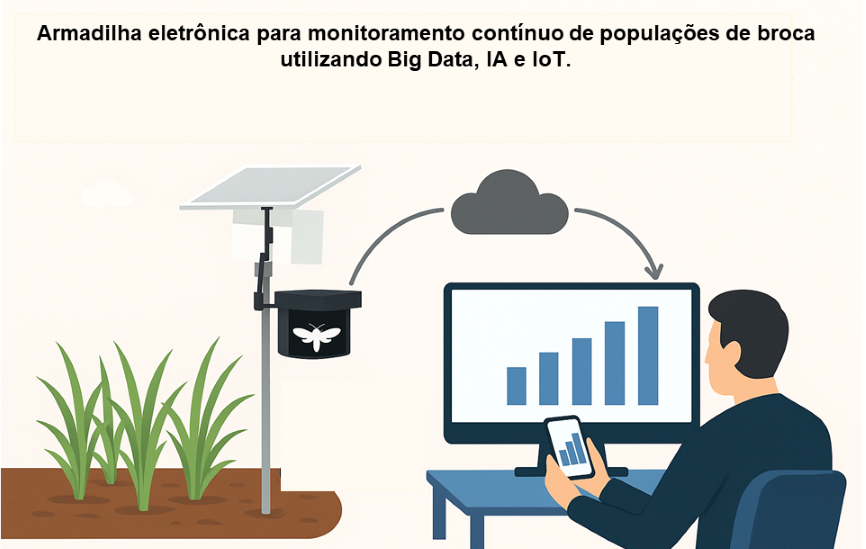
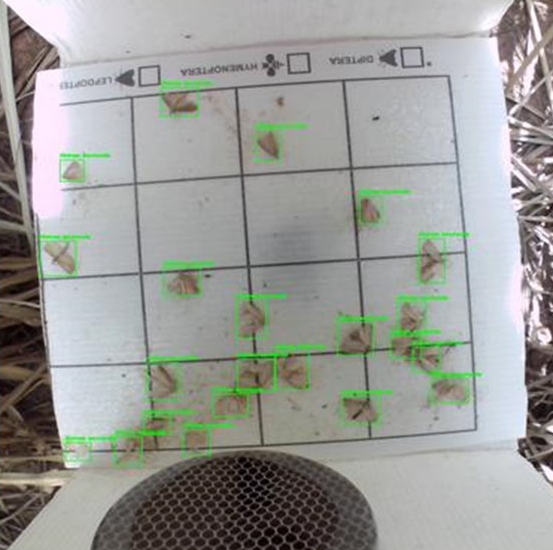
The digital trap works on the same principle as manual traps, but it is much more efficient. While the traditional method requires a technician to visit the field every one to two weeks, the electronic model records data daily. Like the manual trap, the device uses a pheromone to attract male borers. The insects fall onto a sticky base equipped with a camera that takes daily photos and sends the images to the cloud. An AI system automatically identifies and counts the insects. The data is available in real time via the internet, so growers can know exactly when an infestation peak occurs. Armed with this information, growers can take action earlier, whether through biological control or, when necessary, insecticides. The result is a more rational use of pesticides and greater agility in crop management.
In an experiment conducted from January to April of 2025, researchers installed an electronic trap in a sugarcane plot in the Alto Alegre Agrotechnological District. The trap, developed by partner company Elsys, captured and counted adult borers daily and transmitted the data to a digital platform. This made it possible to identify population peaks and calculate the risk of damage in real time.
The researcher explains that Alto Alegre growers considered the prototype representative and easy to use, signaling good prospects for its adoption. Gava adds, "The team is now working to certify the equipment, expand testing to other crops (including fruit crops), and evaluate its effectiveness in monitoring different agricultural threats".
If confirmed on a commercial scale, this technology could help reduce losses, optimize insecticide use, and pave the way for low-carbon agriculture that is more aligned with Brazil's climate commitments.
The study "Monitoring the sugarcane borer (Diatraea saccharalis) using a digital electronic trap in the municipality of Alto Alegre (SP)" was presented at the II Semear Digital Research Workshop. The study was authored by Gluber José de Castro Gava, Elisabete Garcia David, Franz Macedo Bories, Giorggia Tevola Marques, Isabella Clerici De Maria, and Ana Carolina Vidal do Nascimento and received support from the São Paulo Research Foundation (FAPESP).
 |
 |
The prototype of a digital trap is designed to capture male sugarcane borers and indicate infestation levels in sugarcane fields. This information enables growers to take action at the right time and reduce production losses. Photos: Glauber Gava.
Paula Felício Drummond de Castro
Graziella Galinari (MTb 3863/PR)
Press inquires: agricultura-digital.imprensa@embrapa.br
This text was translated with the assistance of artificial intelligence (DeepL and DeepSeek) and reviewed by Érica Speglich